


We’re employee-owned, every team member you work with brings the mindset of a business owner.

Alan Coleman, CEO


Wolfgang Digital is an equal opportunity employer committed to fostering an inclusive workplace


Wolfgang Digital is an equal opportunity employer committed to fostering an inclusive workplace


Over the past 18 months, we’ve been watching something in organic search that doesn’t quite add up. Rankings are holding. Visibility is improving. And yet, traffic is falling.
Some in the industry have started calling this The Great Decoupling, the growing gap between where you appear in search and whether anyone actually clicks through.
When we dug into our own client data, it became clear that the story in 2026 is more layered than a single explanation. Two things are happening at once: search itself is changing, and our measurement of it hasn’t kept up.
Both matter. And if you’re still setting organic targets the way you did two years ago, you’re probably measuring the wrong thing.
Across the Wolfgang Digital client base, organic traffic is down 12% year to date. A few clients are still growing, but they are very much in the minority.
What makes this more interesting is what’s happening underneath.
Around 60% of clients are actually trending up in visibility. Rankings are holding, often improving. Google Search Console impressions are rising. In many cases, sites are appearing for more queries than before.
So the SEO work is doing its job.
But the clicks are not following. And that gap between visibility and traffic is really what this story is about.
There isn’t one cause here. There are a few forces all pulling in the same direction, steadily reducing the number of clicks that leave the search results page.
If you are setting expectations for SEO in 2026, this is the context that matters.
When AI Overviews appear, click-through rates drop sharply. Seer Interactive found a fall from 1.76% to 0.61%, a 61% decline, even at position one.
It’s not just fewer clicks. Behaviour changes too. Pew Research found that only 1% of users click within an AI Overview, and more users end their session entirely when one is shown.
In simple terms, people are getting what they need without leaving Google.
This hits informational and research content hardest, which is exactly the content that has traditionally driven top-of-funnel traffic.
This is less discussed, but commercially important.
Research from Aleyda Solis shows organic click share falling by 11 to 23 percentage points across verticals between 2025 and 2026. Over the same period, paid search gained 7 to 13 points.
The demand hasn’t disappeared. A portion of it has moved into paid placements.
For teams running SEO and PPC together, this changes how budgets and attribution need to be thought about.
BrightEdge reports search impressions up 49% year on year, while CTR fell 30% in May 2025.
More visibility. Fewer visits.
We are seeing the same pattern across Wolfgang Digital clients. Around 68% are holding or growing visibility. Rankings are stable or improving. Google Search Console impressions are up.
And yet organic traffic is down 12% year to date.
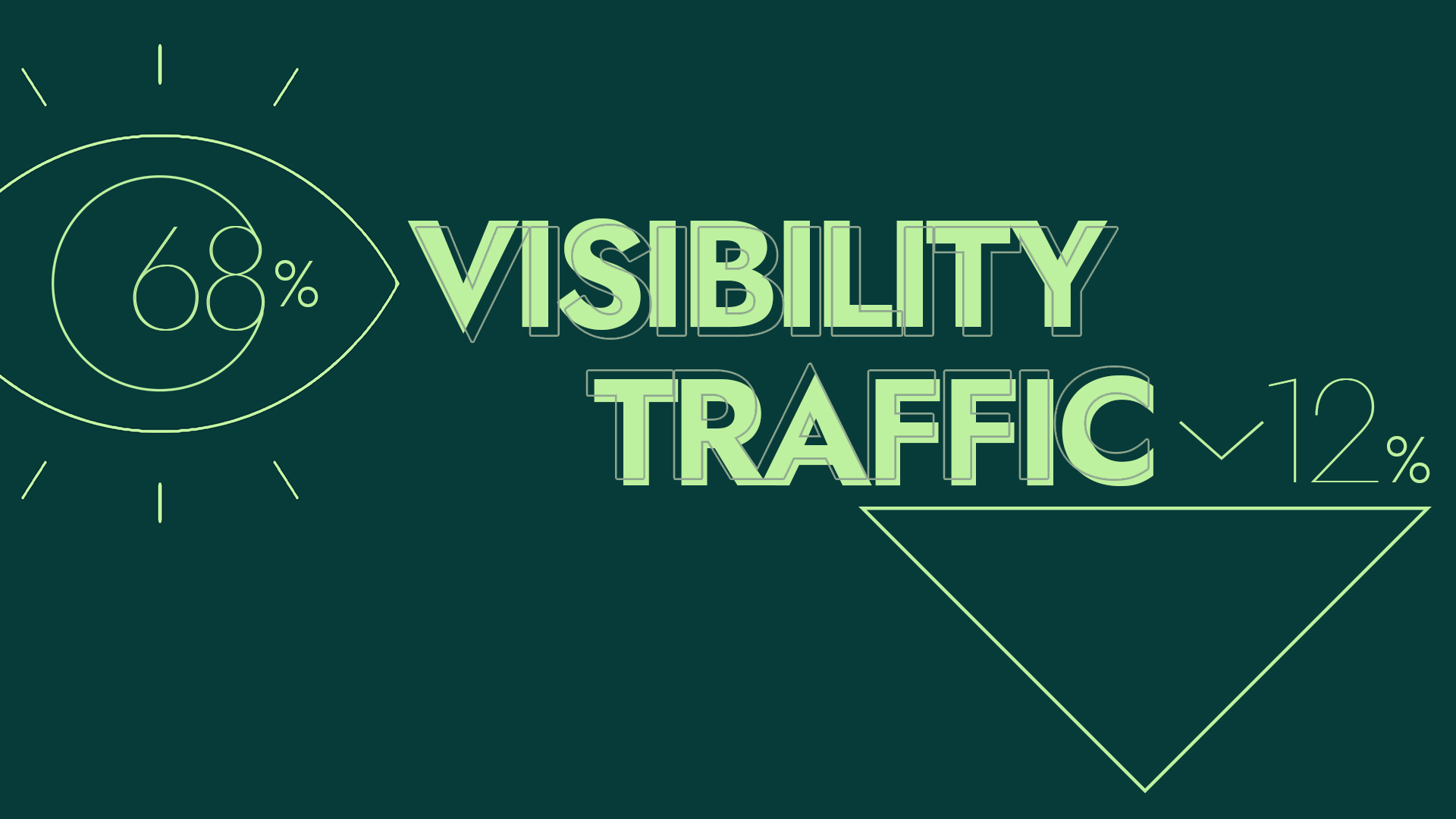
This is The Great Decoupling in real client data, not just industry research.
And it matters.
Because a client whose traffic is down due to ranking loss is in a very different position to one whose traffic is down while visibility grows. GA4 does not show that distinction.
Right now, that distinction is everything.
Some of the decline in organic traffic is not real. It is being misattributed.
Two issues are driving this.
This is not edge case behaviour. It affects most GDPR environments.
In practice, it shows up as falling organic traffic and rising direct traffic at the same time.
We’ve seen this pattern repeatedly. A Wolfgang Digital study in 2020 showed a very different split between Direct and Organic revenue compared to 2025, where the relationship has effectively inverted.
Across our SEO client base, around 60% of Direct traffic is what we call dark direct, visits arriving via long URLs that users are very unlikely to type manually.
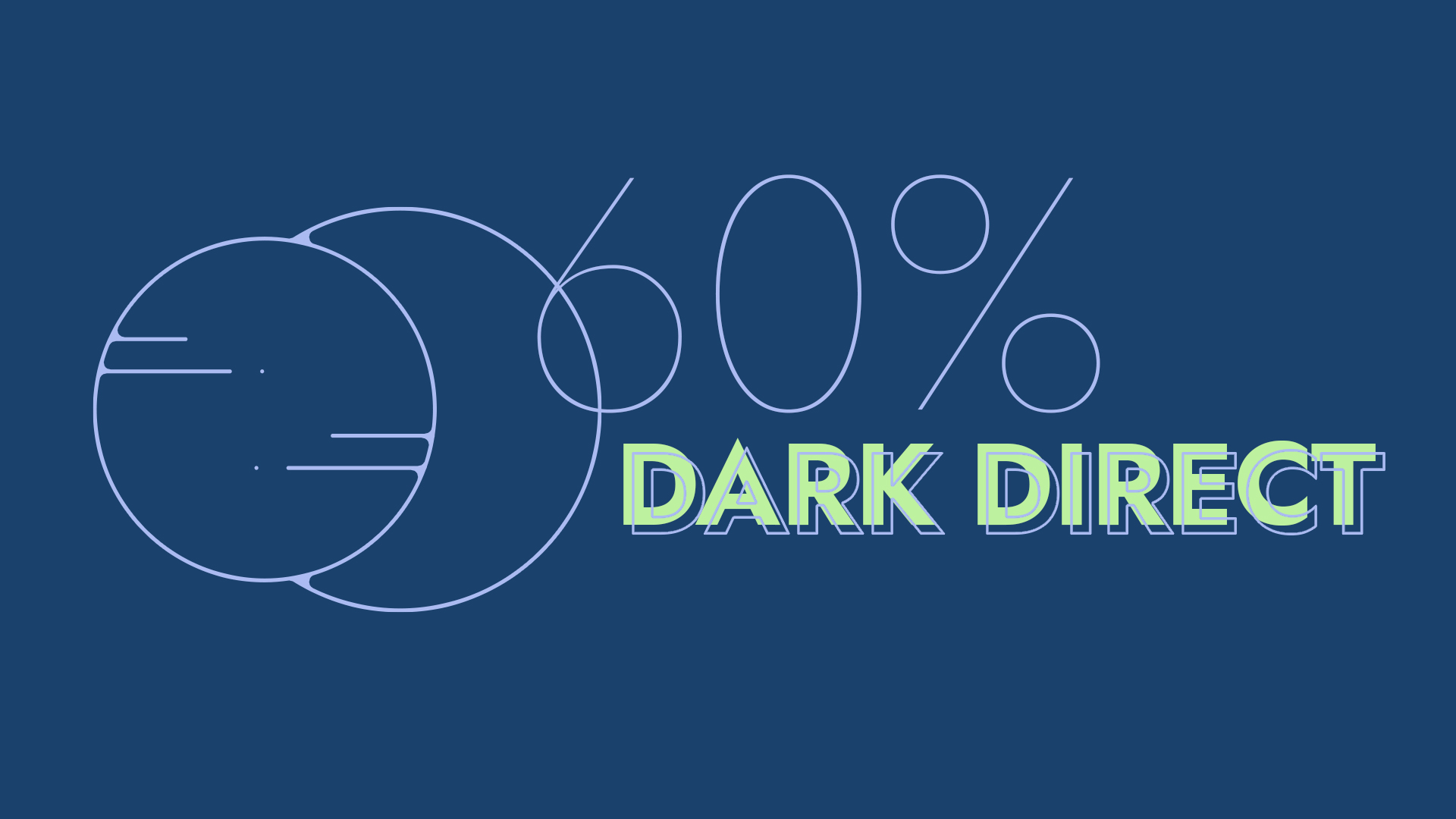
In one case, correcting attribution resulted in a 42% uplift in reported organic revenue for Q1 2026.
This does not cancel out Strand 1. Organic traffic is genuinely under pressure.
But it does mean the decline is often overstated, and some of SEO’s value is being recorded in the wrong channel.
Most organic KPI frameworks were built for a different version of search, where rankings and traffic moved together, and GA4 could reliably attribute sessions.
That is no longer the case.
For commercial teams, this means planning around two realities at once: real structural pressure on clicks, and incomplete measurement of performance.
In practice, organic-only KPIs can now understate impact. For many businesses, a blended view of organic and validated direct is closer to reality.
And performance itself is expanding beyond sessions and rankings. Share of voice in AI results, citation presence in tools like ChatGPT and Perplexity, and branded search growth are all becoming core signals of success.
When a brand is cited in an AI Overview, CTR is about 35% higher than when it is not, according to Seer Interactive. It also correlates with a 91% lift in paid CTR.
While organic clicks will never reach the levels of years past, the above highlights how AI visibility has a meaningful impact for your brand.
We see similar patterns in conversion data. AI-referred traffic converts at around 4.4x standard organic search (Semrush), largely because users arrive with prior trust.
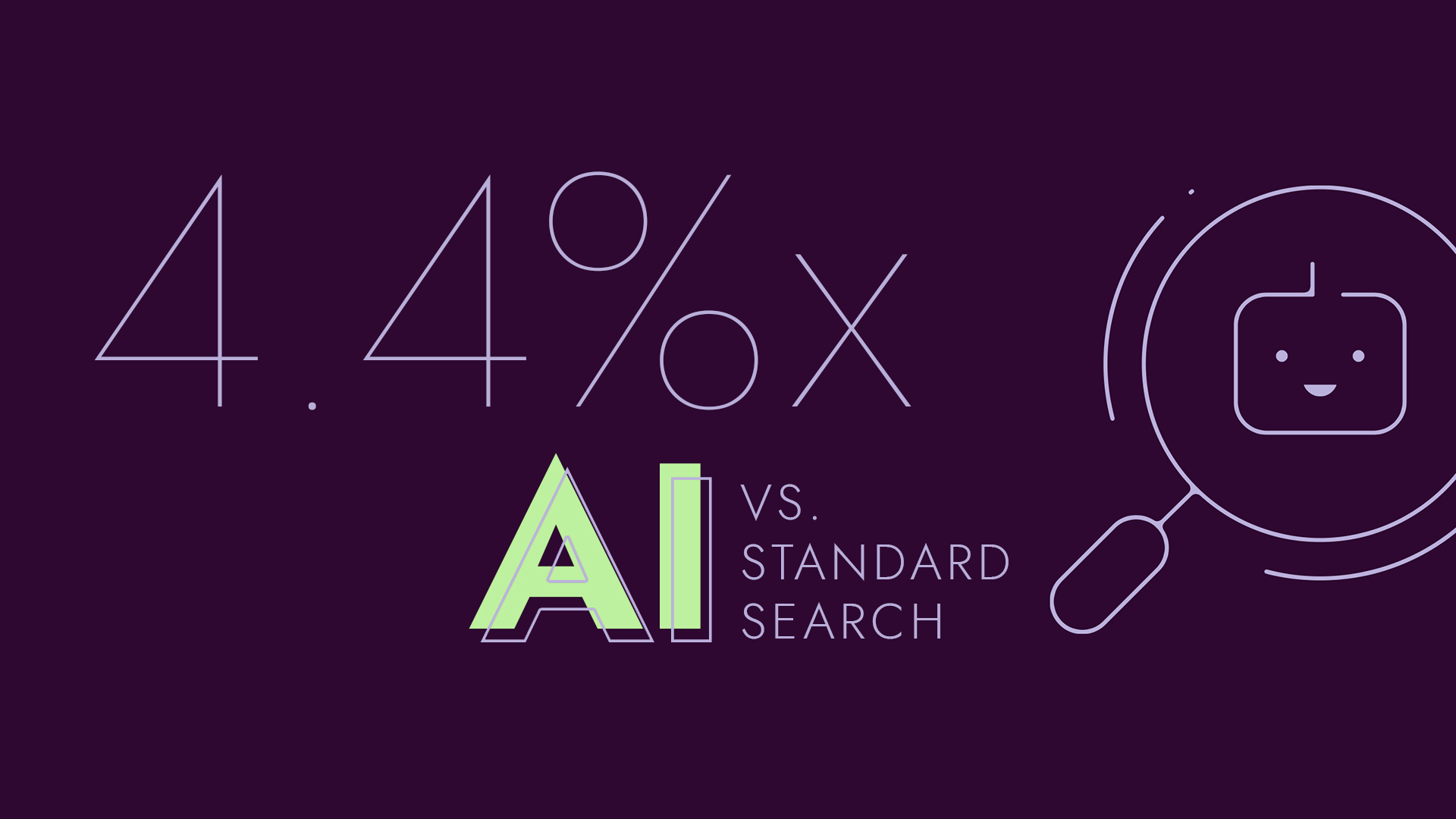
The brands pulling ahead are not just optimising for rankings. They are optimising for citation.
That means structured, expert content that AI systems can extract. It means a clear entity definition so search engines and LLMs understand exactly who you are. And it means measuring visibility beyond blue links.
This is the shift behind AI Search or GEO (Generative Engine Optimisation).
It’s not replacing SEO. It’s extending it into parts of search that traditional analytics cannot yet see.
For many brands, organic traffic will be down in 2026.
The conversation should not be about missed targets. It should be about context.
Search has structurally changed, and measurement has not kept pace.
SEO is evolving from driving traffic alone to ensuring visibility, trust, and presence across a much wider search ecosystem.
Expectation setting matters more than ever. If KPIs are still built on traffic alone, strong performance can look like underperformance.
And this shift is different. It is structural. Even when everything is done right, the impact will still be felt.
For brands that adapt, this is a transition.
For those still working from a 2020 playbook and 2020 measurement, it becomes a much harder conversation.
Wolfgang Digital is now onboarding a limited number of clients to our AI Search service. For brands looking to establish an early advantage in AI-driven discovery, we’ll work with you to develop a strategy that turns AI Search into a scalable acquisition channel. Get in touch if you would like to find out more.


Partner with a 6x Best Global Agency Winner that's as invested in your growth as you are.


