


We’re employee-owned, every team member you work with brings the mindset of a business owner.

Alan Coleman, CEO


Wolfgang Digital is an equal opportunity employer committed to fostering an inclusive workplace


Wolfgang Digital is an equal opportunity employer committed to fostering an inclusive workplace


For years, digital marketing treated YouTube as a mobile-first platform built for short-form content within a fast-paced, distraction-heavy environment.
That assumption doesn’t really hold anymore.
As we move through 2026, YouTube has firmly shifted into the living room.
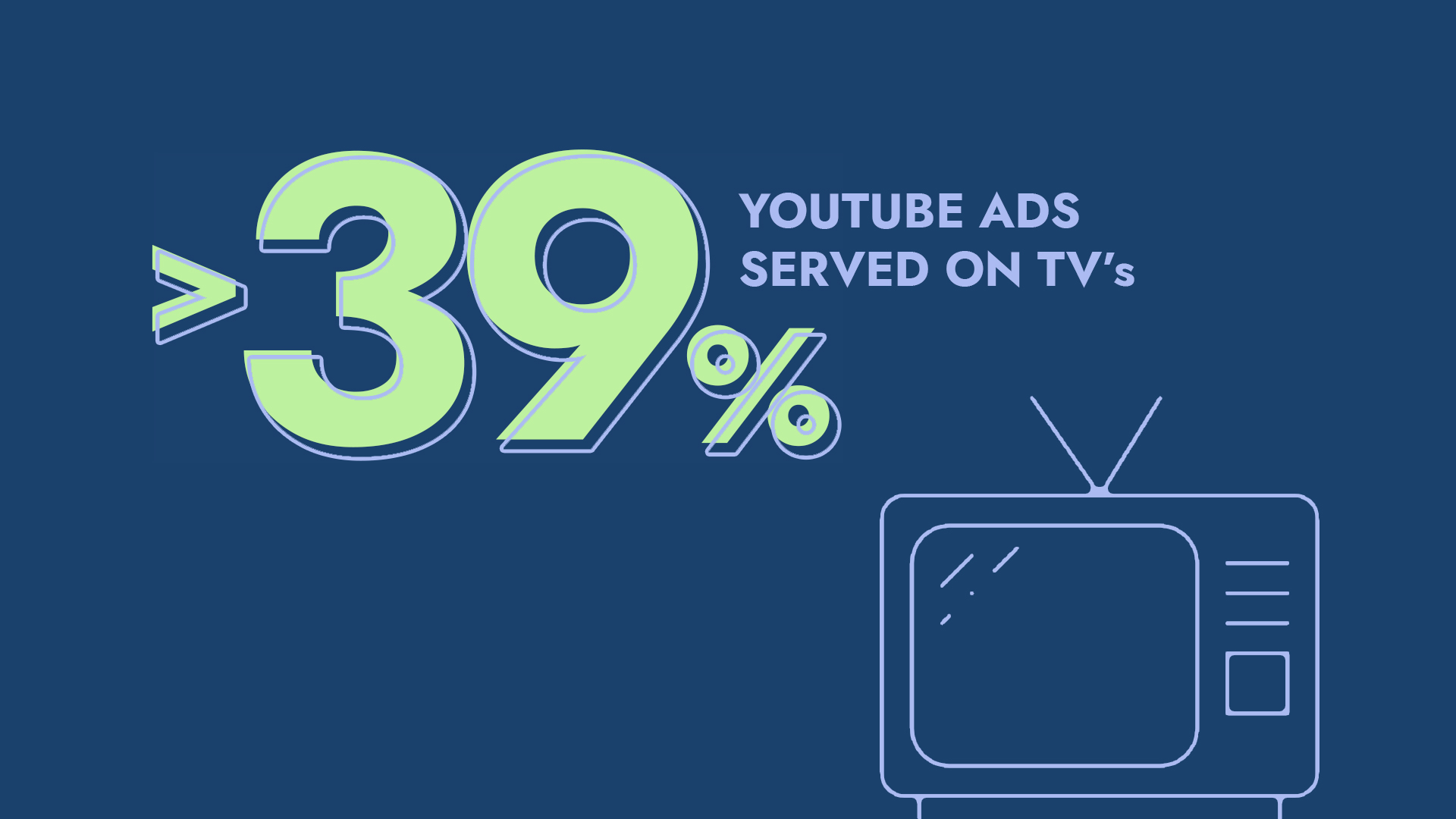
Globally, people now watch over one billion hours of YouTube on TV every day. In Ireland, the trend is just as clear, with over 39% of YouTube ads being served on TVs in Q1 2026, according to Wolfgang Digital’s internal data.
At the same time, YouTube has overtaken Netflix in total watch time, cementing its position as the most consumed video platform in the world.
This isn’t just a change in device. It’s a change in context, attention, and how people actually engage with video.
Moving from a phone to a TV screen changes more than just size. It changes behaviour.
On mobile, attention is fragmented. On TV, it’s sustained.
That shift creates three clear advantages for advertisers:
Shared viewing, not single impressions
TV is rarely a solo experience. One impression often reaches 1.5-2 people in the room. That co-viewing effect naturally increases discussion and strengthens recall in a way mobile can’t replicate.
Borrowed credibility from the TV environment
People still associate the big screen with higher production value and editorial standards. When YouTube ads appear in that environment, they benefit from that perception by default, feeling closer to traditional broadcast than social media.
A better environment for storytelling
TV viewers are more receptive to longer-form content. That opens the door for creative that explains, builds, and persuades, rather than trying to interrupt or win attention in seconds.
The same creative behaves differently depending on where it appears.
On TV, it simply lands differently.
On the big screen, it feels more premium, more intentional and more “real”.
Decades of television have shaped expectations of what “good video” looks like. Those expectations still apply, even when the content is delivered via YouTube.
Add co-viewing into the mix, and the effect compounds. Ads are no longer just reaching individuals; they’re landing in shared environments where reactions and conversations are more likely.
More people. More context. Same impression.
The true disruption is the marriage of Broadcasting Power with Digital Precision. Historically, "owning the living room" required the massive upfront commitments and broad-brush targeting of traditional linear TV (RTÉ, Virgin Media).
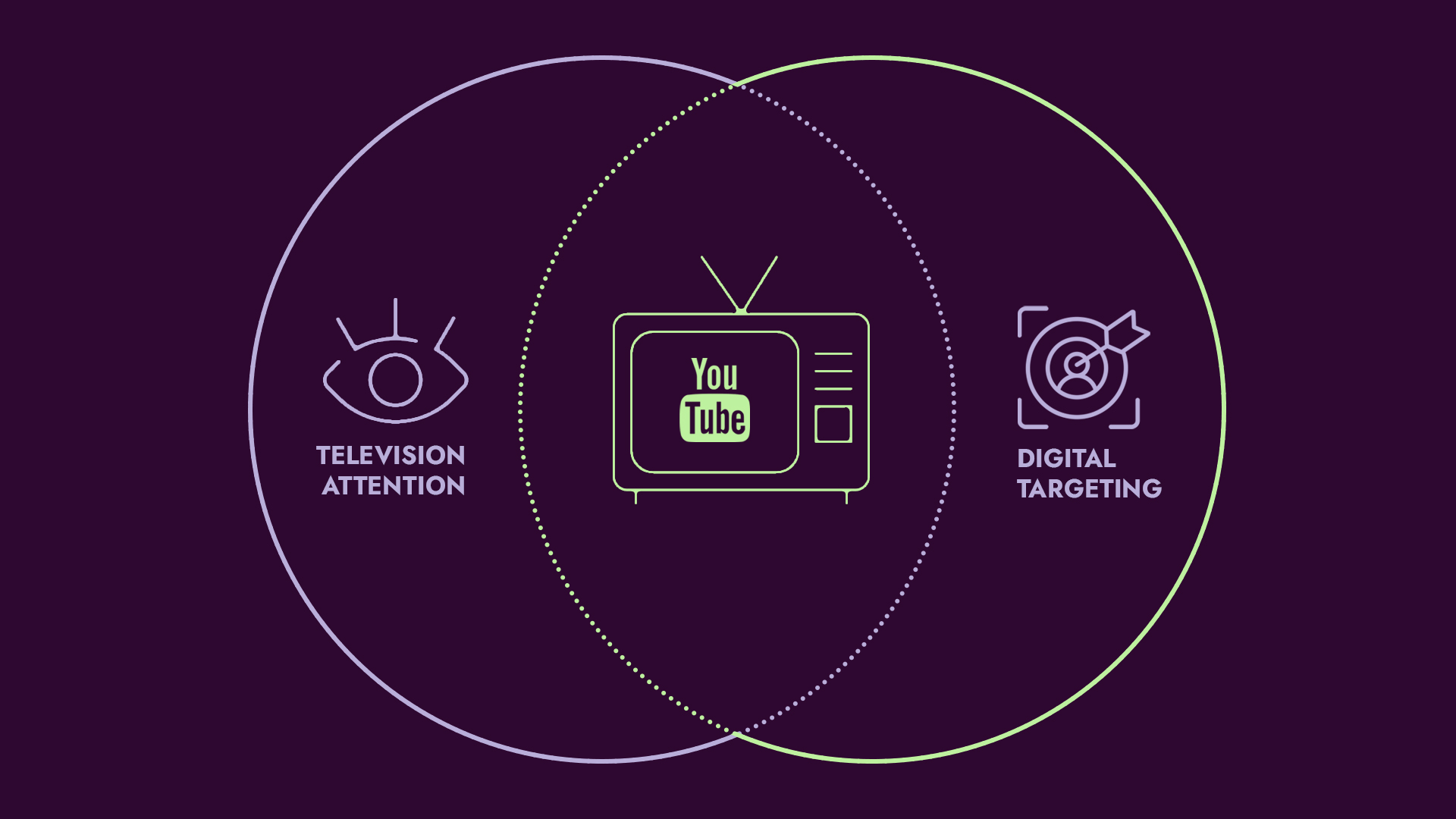
YouTube on TV gives you broadcast-scale attention with digital targeting.
That means a mortgage provider can reach people actively researching homes, and show up on the biggest screen in the house while they’re watching.
The Takeaway: You’re no longer buying a "time slot"; you’re buying an audience in their most receptive environment, with a budget that is entirely scalable.
This is where many advertisers misread performance.
Most underperformance concerns around YouTube on TV come down to measurement, not effectiveness.
Here’s why:
1. No clicks
You can’t click on a TV ad. If CTR is your benchmark, TV will always look like it’s underperforming.
2. Attribution breaks across devices
A user might see an ad on TV and convert later on mobile. That conversion often gets attributed to search or direct, not the original exposure.
3. Co-viewing muddies the data
You’re targeting one logged-in user. You’re reaching a room. The data doesn’t fully reflect that.
4. Short attribution windows miss the build effect
TV doesn’t always convert instantly. It builds awareness and intent over time, which shorter tracking windows tend to miss.
None of this is a platform issue. It’s a measurement framework issue.
To evaluate YouTube on TV properly, the focus needs to shift away from last-click thinking.
More meaningful signals include:
The shift is simple: stop assigning every sale to a single touchpoint, and start measuring overall impact.
That’s where the real value shows up.
Here at Wolfgang Digital, a recent Brand Lift Study revealed a stark contrast in cross-platform ad effectiveness.
Our research found that 30-second non-skippable ads on Connected TV drove a 14% uplift in Brand Awareness, dwarfing the 2% increase generated by the same creative in a skippable mobile format.
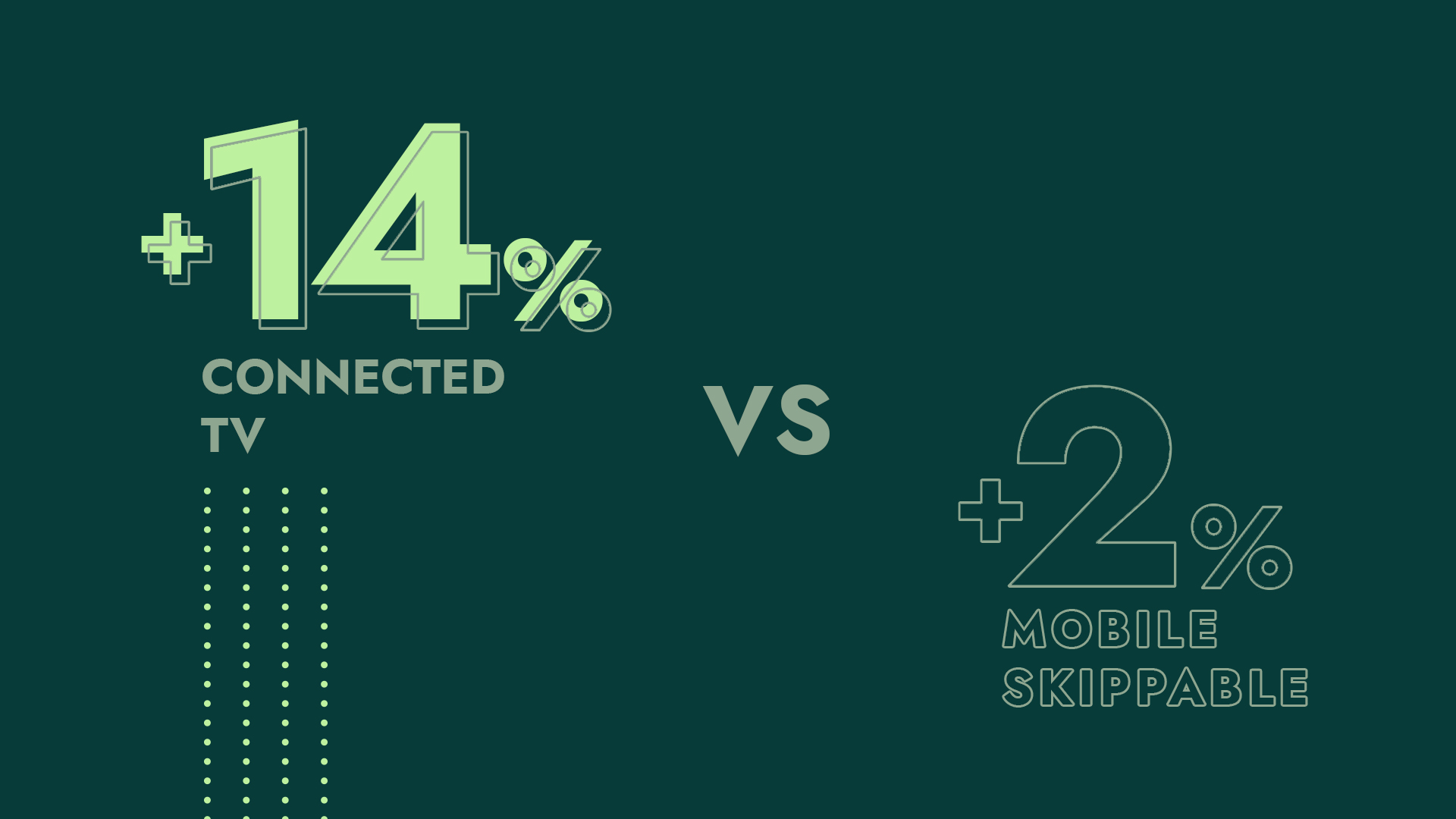
These findings underscore a critical shift in the media landscape: the living room screen has emerged as the premier engine for high-impact reach, offering a level of viewer immersion that mobile struggles to match.
YouTube’s move into the living room isn’t a trend. It’s a fundamental change in how video is consumed.
It now sits firmly inside the TV ecosystem, combining scale, attention, and targeting in a way traditional television never could.
But many advertisers are still planning as if YouTube is a mobile-only channel.
That’s the gap.
To close it, the approach needs to change:
Because the brands getting ahead aren’t just showing up in feeds anymore.
They’re showing up on the biggest screen in the house.


Partner with a 6x Best Global Agency Winner that's as invested in your growth as you are.


