


We’re employee-owned, every team member you work with brings the mindset of a business owner.

Alan Coleman, CEO


SEO moves at an incredibly rapid pace, as does the entire digital marketing sphere. Driven by technology, namely artificial intelligence, as well as many other advancements, it can be tough to keep up sometimes. With so many moving parts; old and new ranking factors, and algorithm updates (Google constantly moving the goalposts!) we’ve all probably felt a little overwhelmed at times.
SEO strategies also vary widely based on industry verticals. So today, from the fortunate position of having a good few hotel groups under our belts as clients in Ireland, the UK and beyond, we’re going to look at a few key considerations specific to hotel SEO that you should be thinking about - that could make or break your organic success.
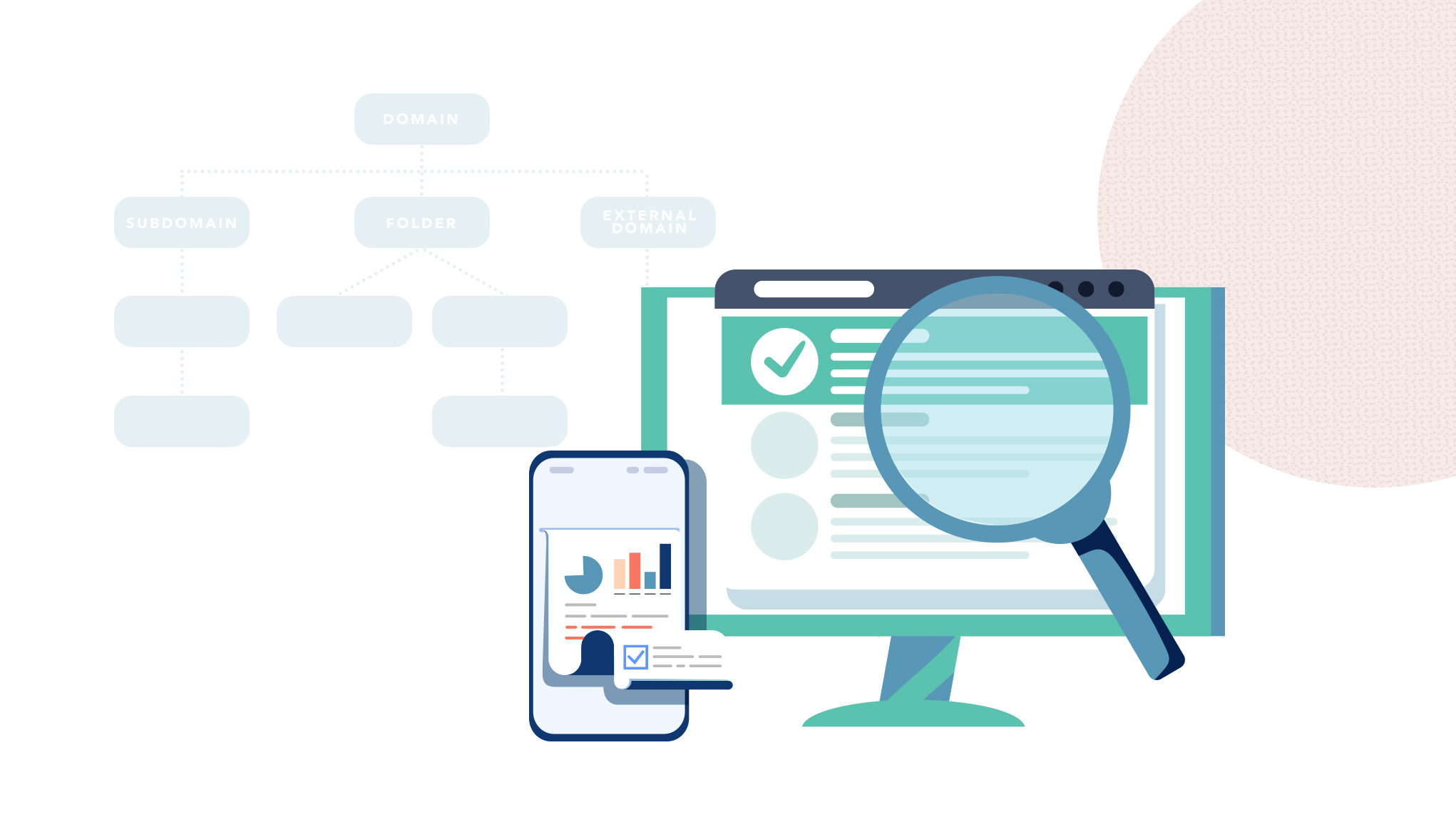
How do we optimally structure our website? Hotel groups usually (and unfortunately) encounter this headache sooner or later – normally around the time of a new site project. Do we change our set-up? Separate domains (TLDs), subdomains or subdirectories? Which is the best solution?
As with a lot of things in the lovely world of SEO, sadly there is no straight up ‘correct’ answer. In SEO, the answer is usually a variation of, “It depends”. As each website and competitive niche is entirely unique, the success of your approach depends on many things, including business objectives, geographical locations and/or internationalisation plans, budgets, internal resources and many other factors as well. If you’re currently struggling with the decision, we have listed some pros and cons for each set up below which may help you!
E.g.
Standalone TLDs Subdomains
https://www.hotelpink.com/ https://www.pink.hotel.com/
https://www.hotelblue.com/ https://www.blue.hotel.com/
https://www.hotelyellow.com/ https://www.yellow.hotel.com/
https://www.hotelgreen.com/ https://www.green.hotel.com/
The positives:
The not-so-positives:
E.g.
https://www.hotel.com/pink/
https://www.hotel.com/blue/
https://www.hotel.com/yellow/
https://www.hotel.com/green/
The positives:
The not-so-positives:
Of course, when you’ve decided on the best technical web structure to suit your business needs, you’ll need to invest time and resources into maintaining technical SEO. It’s one of the few key areas of SEO that has remained relatively constant over the years. Ensure a strong informational architecture (IA) and taxonomy is in place and conform to Google’s best practices on all things technical SEO.
Local SEO & Mobile is huge right now! And local search is becoming increasingly more about mobile. Your customers are largely seeking information in a convenient, fast, user-friendly manner. Think directions, contact information, reviews, things to do in the area, etc. Make it easy for them!
Perhaps not entirely surprising, but nine in ten local searches already take place on a mobile device, and local searches on mobile are 80% more likely to convert. Think about that for a moment; You are (possibly) missing out on 80-90% of potential customers if you are neglecting mobile - a scary statistic when read out loud!
Throw the mobile first index into the mix - we feel safe in saying you’d probably sink straight to the bottom of the SEO ocean if this isn’t baked into your SEO strategy.
Let’s cover some local basics first and foremost. Local SEO is 100% about entity signals: relevance, prominence and proximity. There’s not much we can do on the proximity front (unless your hotel has wheels), but we can optimise for relevance and prominence.

Your Google My Business listing is your strongest entity signal. GMB is still the cornerstone of local SEO. It’s free, it’s fairly straightforward, it will massively help your online presence – use it. Think about the key areas below on how to optimise your hotel group’s Google My Business listing.
Encourage your customers to leave reviews and respond to the good, and the bad! Reviews are huge. Remember, review responses are not for the people who left the review, they’re for everyone else (i.e. your potential customers) that will be reading them!
Yep, content is still king. You need a content strategy; it’s 2019! If you do anything this year, invest in a content strategy. High-quality content not only pleases Google, it delights your users and increases your chances of converting site visitors into bookings too.
Think of it this way: people like to go on holidays, people like to research, and people definitely like to research about where they should go on holidays. They need information around what they should do when they get there, what the weather will be like, where they should eat, drink, and visit. Where they should bring the kids, how they can keep the kids entertained for a whole week, etc. You get the gist.
Create content that provides people with the information they are searching for. It’s really that simple. Just remember, that when it comes to bookings, particularly mobile bookings, there are four key consumer phases of research to remember: dreaming, planning, booking, and experiencing. Content themes will fit into these. Research topics, garner insights, conduct keyword research and get writing.

Below are some examples of how different pieces of content fit into these phases;
Beyond supporting blog content, there are also many content possibilities you can leverage to drive more traffic to your site, and ultimately drive more room bookings. Chase the long-term keywords; [hotel near location] content, [hotel near attraction] content, etc. [hotel near ….] content works particularly well, as this is how people search locally when trying to find a hotel near something they wish to do/visit.
You’re making a travel reservation, and about to enter your credit card details, but the website is painfully slow or doesn’t load at all; sound familiar? The reality of this is that most of us simply make that reservation on a competing website.
Half of web users expect a site to load in 2 seconds or less and are just not willing to wait longer than 3 seconds, at a complete push. We’re all busy, and only getting busier. Unfortunately for smaller, local hotels; the more innovative hotels and OTAs around the globe are setting the bar higher and higher for website performance.
Thankfully, there are lots of website performance analysis tools out there which you can utilise to test your hotel’s website speed or lack thereof. The best part? They are free!

So, what can you do to reduce the load time of your website? Luckily, these tools will tell you what needs to be done, and you can pass that information on to your development agency. You’ll likely get something along the lines of the following recommendations back:
You can also check out this handy Page Speed Report, which will allow you to bulk check your key, high performing pages and immediately get an overview of their speed performance.
In recent years, it has become increasingly apparent that Google plans to keep customers within its “travel ecosystem”. At first, we all worried about the negative effects this would bring, but shifting our mindsets to think of the possibilities, rather than the challenges, is essential when trying to keep up with Google.
A few of us here at Wolfgang Digital attended the last Brighton SEO conference back in September, and Rand Fishkin spoke intriguingly, as always, about On-SERP SEO; Essentially, taking advantage of what we do have left accessible to us. Google is keeping users on the SERPs much later in the buying cycle than before, so optimise for there! Get as much information as possible in front of potential customers while they're still on the results page.
The good news is: if you’ve been keeping up with advancements in SEO and are already “capitalising on the now”, you have a head start with this!
Voice Search also ties in with this shift; massively. Answer boxes and featured snippets are the results of Google pulling your content onto the SERPs. Digital Assistants, such as Alexa, Siri, Cortana, love to say the information within these answer boxes and featured snippets out loud when asked questions.
So, not only should you be focusing on On-SERP SEO for the additional real estate for your usual mobile and desktop searches, think long term… to voice search, as well.
Voice search is more informational intent than discovery or purchase intent and focusing on this type of user intent is key. Take a look at these voice search for local businesses stats below:
So, your GMB profile (if well optimised as above) will massively help you, but if you really want to show up as a voice result, get some featured snippets.
More details can be found in our guide to optimising for voice search.
Structured data, AKA Schema (or vice versa) is important - really, really important. This has been driven by the increasing rise of AI and the general impatience of the society we live in.
In case you need a recap - Google defines Structured Data as “a standardized format for providing information about a page and classifying the page content.” Basically, marking up information already on your website in a way that helps search engines better solve for consumer intent.

Structured data has also been around for a LONG time, but doesn’t seem to be something that has really taken off for everyone. Perhaps given the dev knowledge required, or rather the perceived dev knowledge required.
Without delving straight into the nitty-gritty tech side of creating and implementing structured data, let’s cover some points on why you need to, which might inspire you to do so.
Have we convinced you? Now, onto creating your structured data code. See the following examples below, which you can literally, copy and paste, enter your information and configure on GTM.
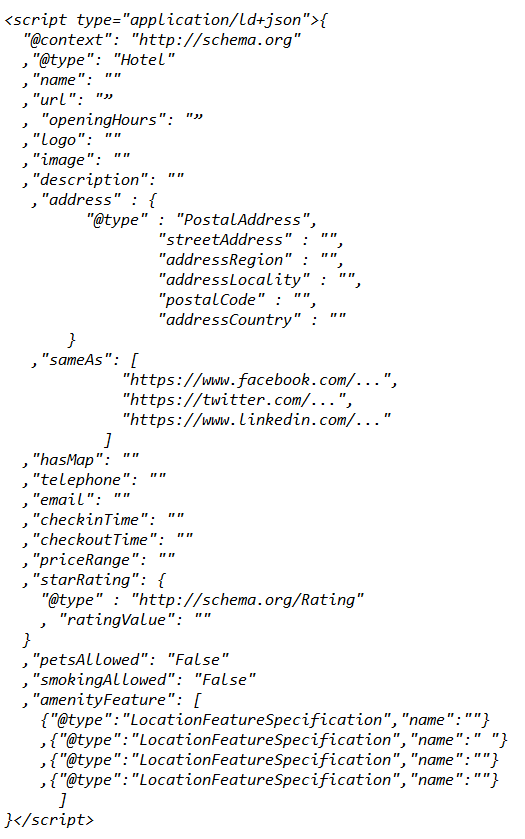
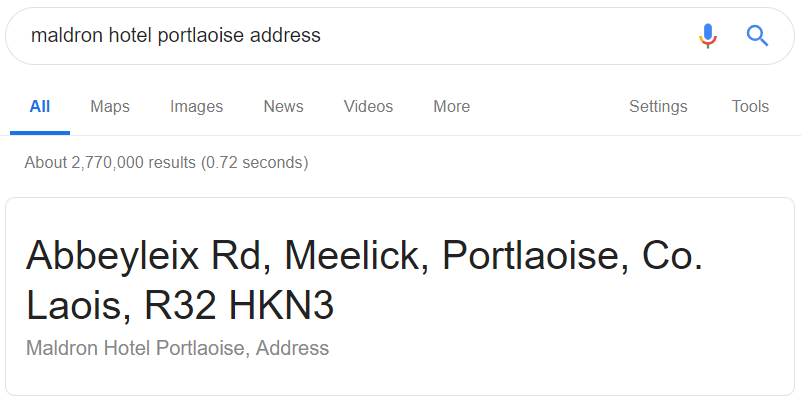
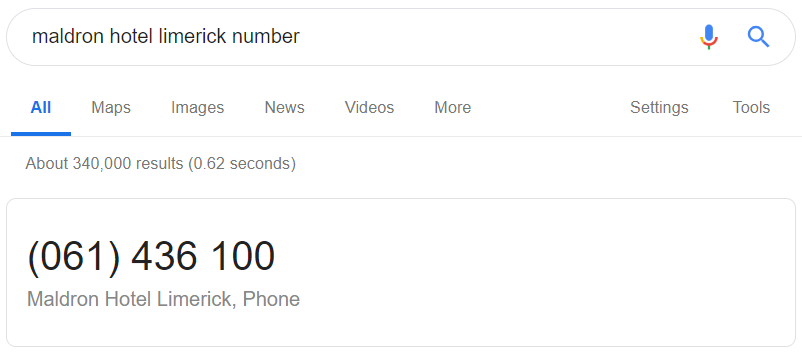
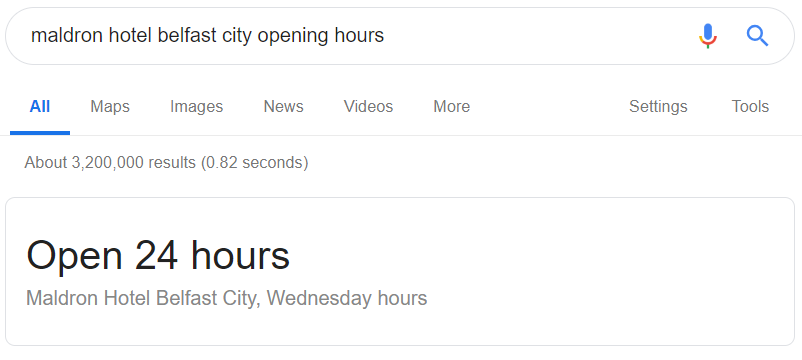
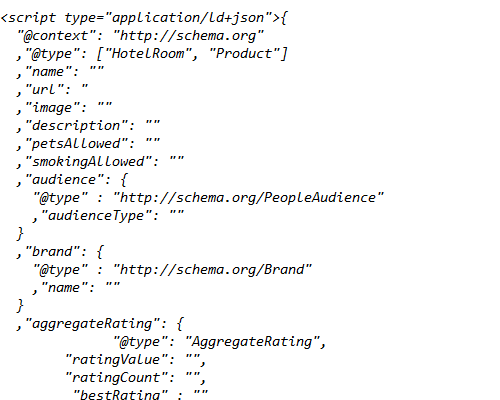
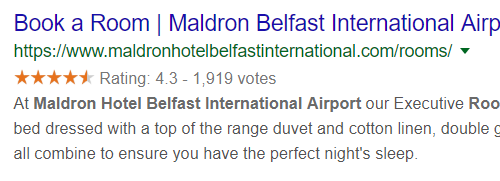
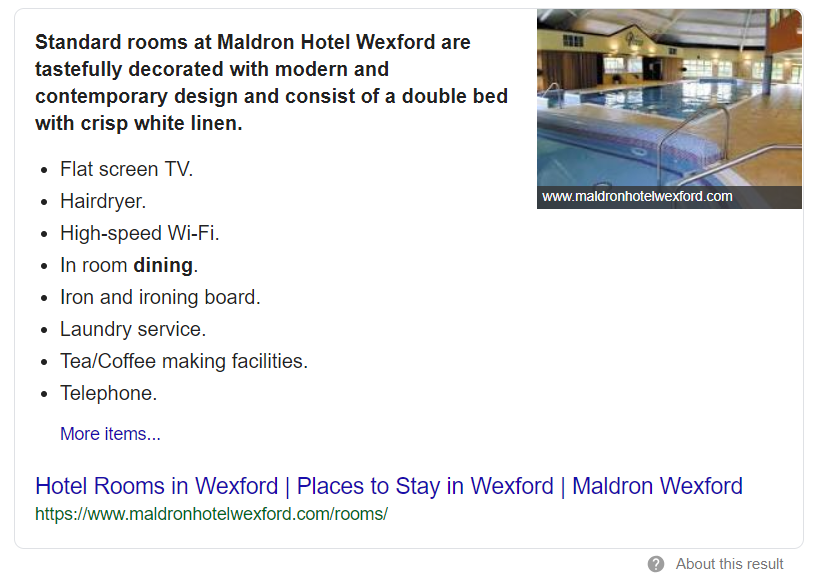
Beyond these examples, there are lots of structured data types suitable for hotels, including and not limited to; restaurant menu schema, bar services schema, leisure/gym facilities schema, hotel prices schema, nearby attractions schema, and so on. See the full list of Hotel schema available on Schema.org/Hotel.
So, go on, get started with structured data today, and ensure your website stands out from the rest on a Google search engine results page (SERP). In most cases, you’ll see your click-through rates, and therefore traffic, increase. We say in most cases, as while most structured data formats are designed to entice a user to visit your site and read more, for very informational driven searches and those featured snippet results, they can detract.
This is because users are obtaining the information they need directly from the SERPs. Think, contact number, address, opening hours etc. The output of this, however, is more qualified organic traffic, that has a higher probability of converting.
Hotel SEO is interesting, fast moving, competitive, and ultimately demands a well thought out strategy. It requires nailing the basics; get your web config and technical down – no amount of awesome content will do you any favours if Google can’t optimally crawl and index your site.
Then think about the new and exciting stuff. Create killer content, all while thinking of search intent. Keep thinking of search intent and mark it up with structured data to gain those featured snippets that will earn you more SERP real estate and those all-important Alexa/Siri voice answers.
All in all, optimise for mobile, optimise for local, and optimise for voice search, and you will likely succeed in all things Hotel SEO, at least in 2019.


Partner with a 6x Best Global Agency Winner that's as invested in your growth as you are.


